WHAT IS THE EVIDENCE FOR THE BIG BANG THEORY?
 Created by Aaron Smith

PAGE THREE

This century has seen a plethora of evidence to support the big bang theory.
Beginning in 1929 with Edwin Hubble’s momentous discovery that, on average,
all galaxies are flying away from each other at speeds that correlate to an
exploding universe, siding with young-earth creationists or static-state theorists
has been increasingly difficult.
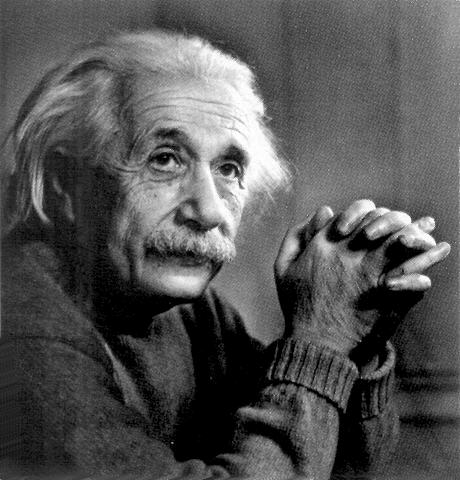
The General Theory of Relativity
Contrary to popular opinion, the big bang theory was not instantly embraced by the scientific community. The prevailing
view during the early twentieth century was that of an eternal or static universe. This view held that everything that
we see in the night sky had always existed and remained stationary. Einstein himself, when he formulated his famous theory
of relativity, was inclined to throw in a “cosmological constant” to make his theory fit a static universe. Only after
Hubble’s discovery, did Einstein toss out this unsightly term and embrace a universe with a definite beginning.
Hubble's Principle
By far, the most compelling evidence in favor of a big bang event is Hubble’s discovery, in 1929, of an expanding
universe. He discovered this by meticulously calculating and plotting the distances and velocities of stars and
galaxies. Hubble found galaxies in the universe are receding from each other in a proportional
relationship: Hubble’s Principle. More distant galaxies are flying apart faster than nearby ones; an unmistakable
effect that could only be caused by an explosion.
The Background Heat Radiation
The background heat radiation can also be construed as evidence for a big bang event. When this phenomenon was first
discovered, it was quickly heralded as the most convincing evidence yet, for the big bang. However scientists were quickly
baffled by the extreme degree of smoothness exhibited by the radiation. No one could figure out how such a ‘clustered’
universe that we see in the night skies could have formed from a seemingly homogenous explosion. The whole of cosmology
seemed to be on the verge of total reformation. Perhaps the big bang theory was wrong after all? A huge breakthrough
finally came in 1992. It was on April fourth of that year that the long-running data analysis from a satellite named COBE,
was finally completed. COBE had been sent up two years prior to gather as many measurements as possible from the
background radiation. The verdict delivered by COBE, when its calculations were completed, was that the background
radiation was not completely smooth, as had previously been thought. The temperature variation is extremely subtle;
about thirty-millionths of a degree. This small temperature variance is all that is needed, however, to put the big
bang theory back on firm footing. As of today, no static model of the universe has been able to reliably explain
the origins of this background heat radiation.
The Thermodynamic Rebuttal
A rebuttal against the thermodynamic argument that some scientists use to refute the big bang can be constructed. When
looking up into the night sky, the universe gives the appearance of being highly ordered (or having little entropy).
Looks can be deceiving, though. All those beautiful stars that can be seen with the naked eye are little more than
gigantic balls of compressed gas. The extreme degree of compression that exists inside stars forces hydrogen nuclei
to come in contact with each other and fuse into helium. This process emits prodigious quantities of energy; more
energy per second than all of the world’s power plants produce in a year. However, this energy is highly disordered
and streams away into the depths of space, never to return. Clearly, entropy is at a much lower level at the beginning
of this process than at the conclusion. The orbits of celestial bodies around each other also do not violate the second
law. Many well-respected scientists have testified for the complete compatibility between the second law of
thermodynamics and the big bang theory.
Home Page
DID THE BIG BANG REALLY HAPPEN?
Page One
WHAT WAS THE BIG BANG?
Page Two
WHAT IS THE EVIDENCE AGAINST THE BIG BANG THEORY?
Page Three
WHAT IS THE EVIDENCE IN FAVOR OF THE BIG BANG THEORY?